Trending

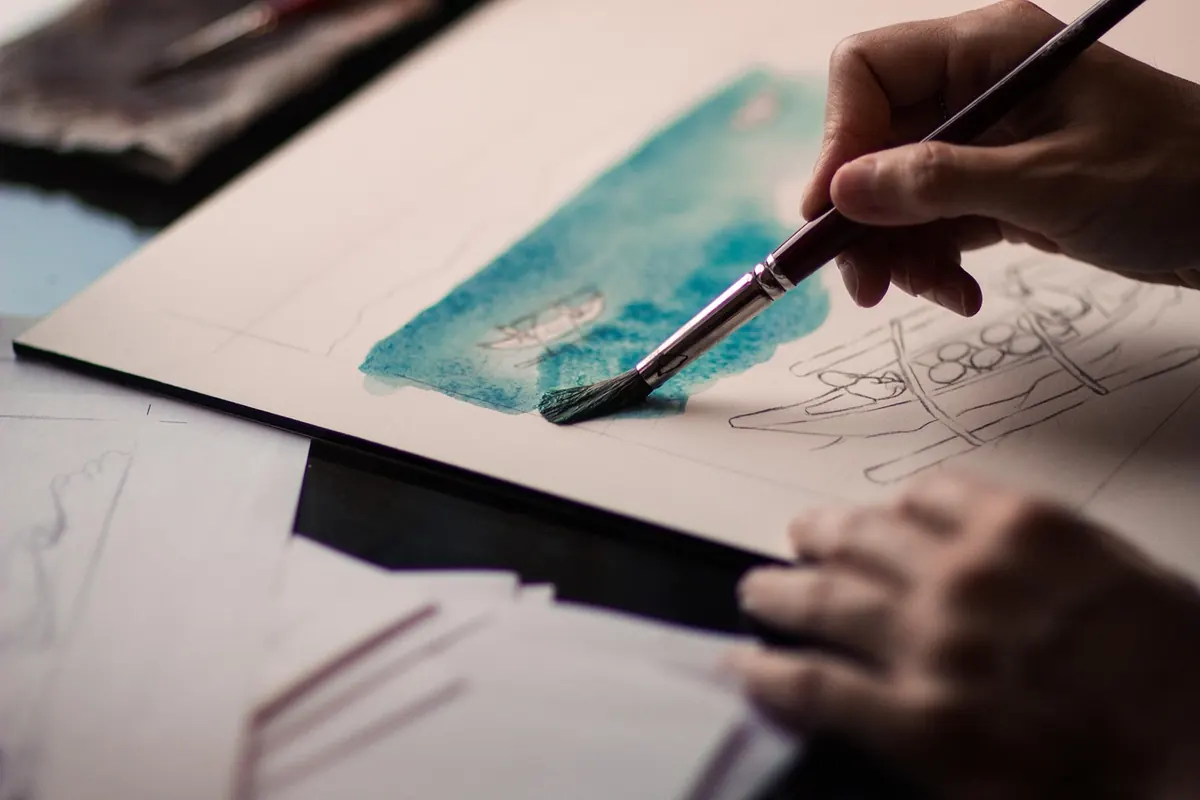
You are halfway up a hill with a small sketchbook and twenty minutes before the light changes. What is in your bag matters more than what you know. Watercolour pencils and traditional watercolours can produce remarkably similar results — a soft sky, a green shadow, a warm brick wall — but they ask different things of you while you work. Neither is better. One simply fits certain sketching situations better than the other.
This is where watercolour pencils usually win. A tin of twelve pencils, a waterbrush and a sketchbook will fit in a jacket pocket. There is no water pot to leak, no palette to rinse, no wet brush rolling around loose in your bag. You can draw standing up on a train platform, close the tin and walk on. The waterbrush holds its own reservoir in the handle, which is the single cleverest piece of kit in this comparison.
A pan set is more portable than people expect. A small metal tin with half pans and a built-in mixing area slips into a coat pocket too. The awkward parts are the extras: a water container, something to blot with, and a brush that will not get crushed. Tubes are the least portable option — fine in a studio, irritating on a bench in the wind.
Paper matters for both. Watercolour pencils used dry will work in a cheap cartridge sketchbook, but the moment you add water you need paper that can take it. Thin paper pills and buckles. A 200gsm cold-press watercolour sketchbook solves the problem for either medium, so treat it as a shared cost rather than a point of difference.
Watercolour pencils let you draw the thing before you commit to the colour. You place a line, check the shape, adjust it, then touch it with a damp brush. For architectural detail, botanical studies, birds, faces or anything where position matters, that sequence is a gift. You can also hatch a shadow and dissolve it into a soft gradient, or leave some marks dry so the drawing keeps a bit of tooth and texture.
Traditional watercolours ask you to think in shapes and values instead of lines. In return, you get far more control over the water itself:
Each medium is weak exactly where the other is strong. Pencils struggle to lay a broad, streak-free wash; the binder keeps pigment slightly grainy, and heavy layers can dry with a faint waxy sheen. Traditional watercolour struggles with fine line work unless you reach for a rigger, and once a strong wash is down, correcting it is close to impossible.
One pencil tip worth learning early: scribble colour onto a plastic lid or an old plate, then pick it up with a wet brush. You get a puddle of paint to work with, which solves most of the flat-wash problem and saves your pencil tips.
Thin pencil washes dry quickly, often within a couple of minutes. Traditional washes are similar, though a heavy wet-in-wet passage on thick paper can stay damp for ten to twenty minutes, longer on a humid day. If you add the next layer too soon you will get mud, and mud is the same colour in both mediums.
The bigger difference is reactivation. Dried watercolour pencil marks come back to life when you wet them again. That is useful — you can soften a hard edge hours later — but it also means a wet brush dragged over a finished area will lift the layer beneath. Work light to dark, let each layer dry properly, and keep a scrap sheet beside you to test colours and water levels before you commit them to the real sketch.
If you are working outdoors and short of time, build the darks last. Darks laid early are the ones most likely to be disturbed by everything that follows.
A basic set of either medium sits in a similar bracket at the affordable end. Beyond that, the economics shift with how you work. Pans last a long time but hold a modest amount of paint. Tubes give you far more pigment for your money and are the sensible choice if you work large; squeeze them into an empty pan set and let them set overnight. Pencils are consumed by sharpening, and soft, richly pigmented pencils wear down quickly, so a heavily used favourite colour disappears faster than you expect.
Remember the extras. Traditional watercolour needs brushes and a water container on top of paint and paper. Pencils need a decent waterbrush and a sharpener, and you will still want two or three real brushes for finer work. Artist-quality paint costs more per colour but goes further and mixes more cleanly than student ranges, whichever you choose.
If you are unsure, match the medium to the job in front of you:
There is also a middle path. Pencils are excellent for adding crisp detail over a loose watercolour wash, and a wash under a pencil drawing gives it weight and unity. Many sketchbooks end up containing both, used on the same page.
Borrow or buy the smallest version of each and run one honest test. Paint the same subject twice — a simple pot plant, a street corner, a single apple — once in pencils and once in pans, in the same sketchbook, on the same afternoon. Note how long each took, how much kit you needed, and which one you reached for the next day.
That last point is the real answer. The medium that gets you sketching more often is the one worth your money. If you want a starting kit, keep it small: a sketchbook of cold-press watercolour paper, a waterbrush, and either a dozen watercolour pencils or a compact pan set with two round brushes and a folding water pot. Add colour as you find the gaps. Both mediums reward patience, and neither will let you skip the drawing underneath.
Photo: Pexels / Pixabay