Trending

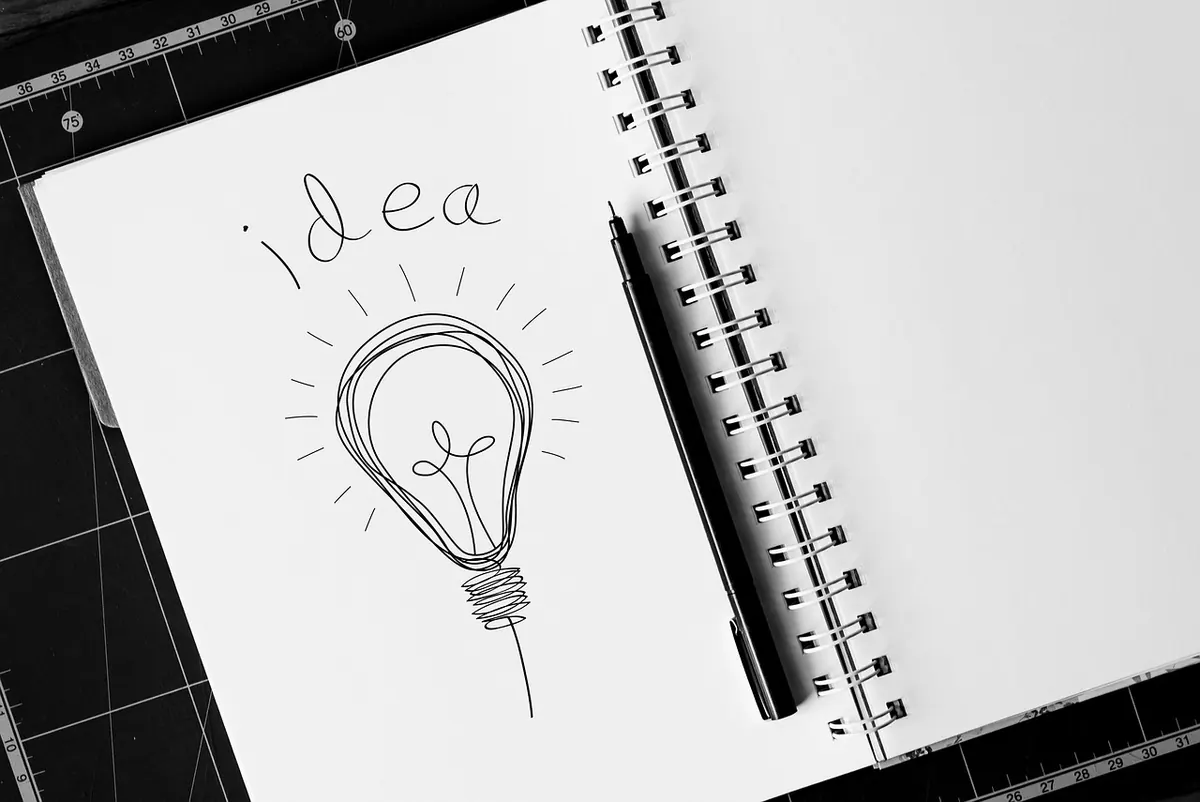
Thirty sketches in thirty days, and one rule for every one of them: the pencil stays on the paper from the first mark to the last. No lifting, no checking the page, no second attempt at a jawline you have already drawn. It sounds like a stunt until you have done it for a week and noticed that your careful, cramped drawings have started to breathe.
The challenge suits anyone who can hold a pencil: complete beginners who overthink every line, and experienced sketchers whose work has gone tight. Budget ten to twenty minutes a day. That is the whole commitment.
Most stiffness comes from stopping. You draw a curve, lift the pencil, glance at the paper, judge the curve, adjust it, lift again. Every one of those pauses is a small act of editing, and editing while you draw pulls your attention off the subject and onto your fear of getting it wrong.
Remove the lift and the editor loses its foothold. Your hand has to keep moving, so it starts solving problems in real time: a shoulder becomes one long arc instead of five short strokes, a shirt fold becomes a single sweeping loop. The results are often wonky. They are also almost always more alive than the tidy versions sitting in the same sketchbook.
It is also the quickest route into the habit of looking. When you cannot lift the pencil, you cannot draw from memory: you have to keep your eyes on the subject, checking where the line goes next. That one change does more for accuracy than any amount of measuring.
The thirty days run in four phases, so the difficulty climbs without turning into a grind.
Cups, keys, houseplants, shoes. One object, one continuous line, five minutes. The drawing is not the point; learning what your hand does when it cannot stop is.
Add a second object, then a third, and let them touch. Overlapping shapes are where one-line drawing gets interesting, because you have to plan the order you will travel around the forms, a bit like plotting a route on a map.
Hands, feet, a friend reading, someone waiting for a bus. Living subjects will not hold still, which is fine: a continuous line is quick. Draw from life where you can, and use a mirror when you cannot.
A corner of a room, a café table, a view from a window. Fifteen to twenty minutes each. By now the single line should feel less like a constraint and more like a habit.
Work through them in order or shuffle them to suit whatever is in front of you.
A cheap A4 or A5 sketchbook and anything that makes a mark. A 2B or 4B pencil is forgiving; a fine liner is stricter and, for this challenge, slightly better, because it removes the option of erasing. Leave the rubber in the drawer.
Sit so you can see your subject without moving your head much, and keep the sketchbook flat rather than tilted towards you. If you are drawing a person, sit to one side rather than directly opposite — they will relax, and you will get more drawings out of them.
Very common in the first week. Plan the route before you begin: start at the left edge of the subject, work across, then come back through the middle. Doubling back over your own lines is allowed, and often looks good.
Start smaller than feels natural — about a third of the page — and keep the edges
Photo: Tumisu / Pixabay